
Satta Matka Jodi, Patti and Ank: What Do They Mean?
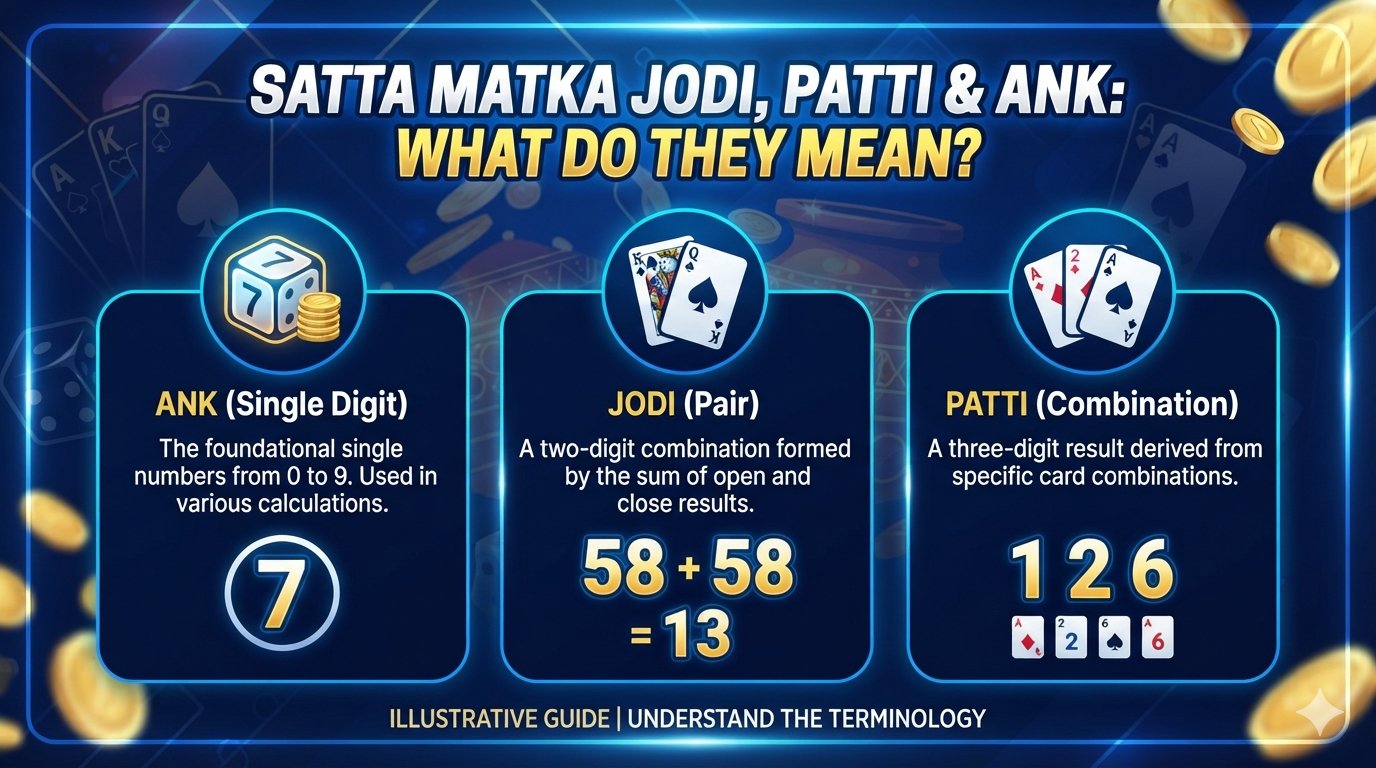
Understanding these terms can make it easier to read and interpret information about satta matka without confusing one term with another.
This article explains the basic meanings of Jodi, Patti, and Ank, how these terms are generally used, and why they are important when discussing traditional matka results.
What Is Satta Matka?
Satta matka is a traditional number-based gambling format that originated in India and developed over several decades. Historically, the system evolved from forms of betting associated with commodities and later became connected with randomly selected numbers.
Over time, different formats and terminology developed around the game. The exact rules and terminology can vary between different operators, regions, and historical versions. This is why it is important to understand that terms used in one satta matka chart may not always be presented in exactly the same way elsewhere.
Among the most commonly encountered terms are Ank, Patti, and Jodi.
What Does Ank Mean in Satta Matka?
The word Ank generally refers to a single digit or number used within the traditional result format.
In many descriptions of satta matka, the basic digits range from 0 to 9. These individual digits can form part of larger combinations used in traditional result charts.
Examples of individual Ank values include:
- 0
- 1
- 2
- 3
- 4
- 5
- 6
- 7
- 8
- 9
The important point is that an Ank is generally a single digit, whereas Jodi normally represents a combination of two digits and Patti represents a three-digit combination.
What Is Patti?
Patti is another important term in traditional satta matka terminology. It generally refers to a three-digit combination.
A Patti contains three digits. For example, a three-digit number such as 123 can be described as a Patti in traditional terminology.
The digits in a Patti are used as part of the result structure in various versions of the game. Depending on the specific format, Patti combinations may be categorized differently.
Some historical result charts also use terms such as single Patti, double Patti, or other classifications. These classifications can depend on the relationship between the digits in the three-digit combination.
For someone reading a satta matka result chart, recognizing that Patti generally means a three-digit combination is useful because it distinguishes Patti from Ank and Jodi.
What Does Jodi Mean?
Jodi generally means a two-digit combination.
For example, if two individual digits are placed together, such as 27, the resulting two-digit number may be referred to as a Jodi.
In traditional satta matka terminology, Jodi is therefore different from both Ank and Patti:
- Ank: generally one digit
- Jodi: generally two-digit combination
- Patti: generally three-digit combination
This simple distinction is one of the first concepts encountered when researching traditional matka-related information.
However, the meaning and use of these terms can vary depending on the specific game format. Readers should therefore check the definitions associated with the particular chart or platform they are viewing.
Jodi vs Patti vs Ank
The easiest way to understand the terminology is to compare the three terms:
| Term | General Meaning | Example |
|---|---|---|
| Ank | Single digit | 5 |
| Jodi | Two-digit combination | 25 |
| Patti | Three-digit combination | 125 |
This table provides a simplified explanation of the traditional terminology. The distinction is primarily based on the number of digits involved. Ank represents a single digit, Jodi generally represents two digits, and Patti generally represents three digits.
Why Are These Terms Important?
Understanding these terms can make satta matka result information easier to read.
A result chart may contain several numbers, abbreviations, and categories. Without knowing the terminology, a reader may not understand whether a particular number represents an individual digit, a two-digit combination, or a three-digit combination.
For example, seeing 7, 27, and 127 together could initially appear confusing. Once the terminology is understood, the structure becomes easier to recognize:
- 7 → Ank
- 27 → Jodi
- 127 → Patti
This terminology is part of the historical vocabulary associated with the game and continues to appear in online discussions and archived result charts.
Historical Background of the Terminology
The language surrounding satta matka developed alongside the evolution of the game itself. Traditional number-based gambling practices changed over time, and different regions and operators introduced their own formats and terminology.
As the activity moved from traditional physical settings toward websites and mobile platforms, many of the original terms remained in use.
Today, people searching online for information about satta matka may encounter a mixture of traditional terminology and modern digital language. This can make the subject appear more complicated than it actually is.
Understanding the basic vocabulary provides a useful starting point for interpreting historical and informational material.
Are Jodi, Patti and Ank the Same Thing?
No. Although the three terms are connected, they generally refer to different number formats.
Ank usually refers to one digit. Jodi usually refers to two digits combined together. Patti generally refers to three digits.
The terminology can therefore be summarized as:
- Ank → one digit
- Jodi → two digits
- Patti → three digits
The terminology may have additional classifications depending on the particular format being discussed, so readers should always refer to the rules or definitions provided by the relevant source.
Why Result Terminology Can Differ
One important consideration when researching satta matka online is that terminology is not always completely standardized.
Different websites may organize historical results differently. Some may use additional categories, abbreviations, or local terminology. Older descriptions may also use terms differently from modern websites.
For this reason, readers should avoid assuming that every chart uses exactly the same format.
If a website provides a glossary or explanation of its result format, reading that information first can prevent misunderstandings.
Satta Matka and Responsible Information
It is important to distinguish between understanding terminology and participating in gambling activities. Learning what Ank, Jodi, and Patti mean is simply an explanation of traditional terminology.
Gambling can involve financial loss and may be restricted or regulated differently across Indian states and jurisdictions. Anyone researching satta matka should check the applicable local laws and regulations before participating in any gambling-related activity.
People should also be cautious about websites that claim to provide guaranteed results, fixed numbers, prediction formulas, or guaranteed profits. Random-number outcomes cannot be reliably guaranteed by promotional claims.
Frequently Asked Questions
What is an Ank in Satta Matka?
Ank generally refers to a single digit, usually from 0 to 9, within traditional number terminology.
What is a Jodi?
Jodi generally refers to a two-digit combination. For example, 25 can be described as a Jodi in traditional terminology.
What is Patti?
Patti generally refers to a three-digit combination. For example, 125 can be described as a Patti.
What is the difference between Ank and Jodi?
An Ank generally contains one digit, while a Jodi generally contains two digits.
What is the difference between Jodi and Patti?
A Jodi generally consists of two digits, while a Patti generally consists of three digits.
Does every Satta Matka chart use the same terminology?
Not necessarily. Different formats, websites, historical sources, and regional practices may use terminology differently. It is therefore useful to check the definitions provided with a particular result chart.
Conclusion
Understanding terms such as Ank, Jodi, and Patti is useful for anyone researching the history and terminology of satta matka. In their most common traditional usage, Ank refers to a single digit, Jodi refers to a two-digit combination, and Patti refers to a three-digit combination.
These terms form part of the vocabulary that has developed around traditional number-based gambling in India. While online platforms may present the information in different formats, knowing these basic definitions makes historical result charts and related discussions easier to understand.
At the same time, terminology should not be confused with a prediction method or a guarantee of winning. Anyone encountering gambling-related content should consider the financial risks involved and verify the applicable laws in their jurisdiction before taking part.